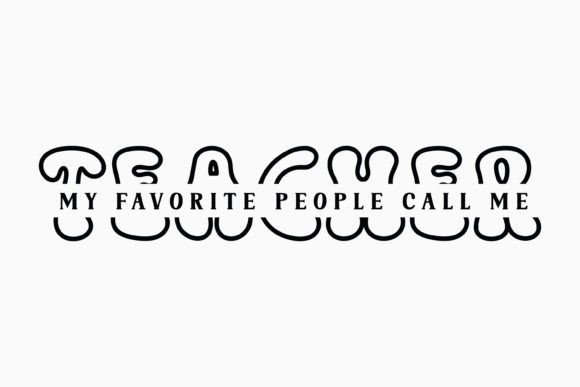
My Favorite People Call Me Teacher Retro
There is a specific kind of magic that happens when you open a digital file and immediately see the potential for a finished product. As someone who has spent years evaluating embroidery designs for real-world applications, I look past the marketing fluff to see how a design actually behaves on fabric. Today, I am putting My Favorite People Call Me Teacher Retro through its paces. This isn't just another quote; it is a design asset that speaks directly to the heart of the education sector, but does it hold up under the needle?
The First Impression: Mood and Visual Personality
When I first loaded the My Favorite People Call Me Teacher Retro file, the immediate feeling was one of nostalgia wrapped in modern simplicity. The retro aesthetic suggests a warm, approachable vibe that fits perfectly with current trends in handmade goods. It feels like something you would find hanging in a cozy classroom or tucked into a gift bag from a grateful student.
The layout is clean, which is crucial for embroidery. Unlike some busy graphics that lose definition when stitched, this design relies on strong typography and clear shapes. The "Retro" element implies a specific color palette—likely soft pastels or muted earth tones—but the beauty of this file lies in its flexibility. With 100 color change options, the designer can tailor the mood instantly. Whether you want a vintage cream background with sage green text or a bold navy with gold accents, the visual personality shifts to match your brand identity without losing its core charm.
Real-World Application: From Screen to Stitch
Let's imagine a scenario. You are an Etsy seller preparing for the back-to-school season. You have a client who wants a custom embroidered tote bag for their favorite elementary school teacher. They need something professional yet heartfelt. This is where My Favorite People Call Me Teacher Retro shines.
On a canvas tote, the design would sit beautifully centered or slightly off-center for a more casual look. The text is legible even at smaller scales, making it versatile for various product sizes. However, if you are thinking about moving this to a sweatshirt, the considerations change. A heavy cotton fleece requires a design with enough stitch density to stand out against the texture. If the original file includes fill stitches, they will create a nice raised effect on the chest area of a hoodie, adding a tactile dimension that customers love.
I also envision this design on baby items. A onesie or a small nursery pillow featuring this quote could be a massive hit for baby showers targeting parents who work in education. The retro style adds a timeless quality that won't look dated in five years, increasing the perceived value of the finished product. For commercial embroidery projects, such as boutique branding or small shop merchandise, this design offers a high return on investment because it appeals to a broad demographic of teachers, administrators, and support staff.
Where to Exercise Caution
While the design is robust, no single file works perfectly everywhere. There are specific scenarios where My Favorite People Call Me Teacher Retro might require extra attention or might not be the right choice at all.
- Small Hoop Sizes: If you are working on tiny patches or very small accessories, check the lettering size. Fine details in retro fonts can sometimes blur if the hoop is too tight or the stitch count is too low. Always test on scrap fabric first.
- Textured and Stretchy Fabrics: Embroidery on stretchy materials like jersey or thin knits can lead to puckering. You must use the correct stabilizer, likely a cut-away for stability, to ensure the design lays flat. On textured fabrics like bouclé or thick corduroy, the definition of the retro curves might get lost.
- Dense Stitch Areas: If the design includes large blocks of fill stitch, ensure your machine can handle the density. Too much thread in one spot can cause the fabric to pucker or the needle to break, especially on dark fabrics where the thread coverage needs to be perfect.
- Curved Surfaces: While great for flat items like aprons and tea towels, applying this to a cap requires careful digitizing adjustments. Curved surfaces demand a different approach to tension and placement to avoid distortion.
Visual Appeal and Customer Trust
In the world of handmade products, the finish line is what sells the item. A poorly executed embroidery job can ruin a great design, but a well-stitched piece builds trust. My Favorite People Call Me Teacher Retro is designed to look professional, which translates directly to customer satisfaction.
When a buyer receives a personalized gift with crisp satin stitches and clean edges, they perceive the maker as skilled and reliable. This design supports that narrative. The ability to easily change colors means you can match thread colors to the recipient's preferences, creating a truly personalized gift that feels bespoke. For craft business owners, this level of customization is key to standing out in a crowded market.
Furthermore, the retro theme resonates emotionally. It evokes memories of chalkboards, apple-shaped erasers, and the pride of the profession. When a customer sees this design on a finished product, they feel an immediate connection. This emotional resonance increases the likelihood of repeat business and positive reviews, which are vital for any small shop product or digital product seller.
Practical Notes for the Embroidery Designer
Before you rush to start production, there are a few technical steps every experienced designer should take. Even though the file comes with source files (EPS, SVG) and is ready to print, the transition from vector to stitch is where the magic happens.
- Check Thread Color Contrast: Since the file allows for 100 color changes, do not assume default settings will work on all fabrics. Test light threads on dark fabric and vice versa to ensure readability.
- Review Stitch Density: Inspect the fill areas. If the design is intended for a machine embroidery file, verify that the stitch density is appropriate for the fabric weight you plan to use. Light fabrics need lighter densities to prevent puckering.
- Hoop Size Confirmation: Ensure your hoop size matches the design dimensions. If you are scaling the design down for a baby item, check that the smallest details remain visible.
- Stabilizer Selection: Use the proper stabilizer for your project. For apparel like t-shirts, a tear-away might suffice, but for items that need frequent washing, like kitchen towels or aprons, a cut-away stabilizer is often necessary for longevity.
- Licensing Verification: Before selling finished items or using this as a commercial design asset, confirm the licensing terms included with the download. Some files are for personal use only, while others allow for limited commercial sales.
Final Thoughts on Design Assets
My Favorite People Call Me Teacher Retro is more than just a graphic; it is a tool for creators who understand the value of thoughtful design. It bridges the gap between digital convenience and physical craftsmanship. Whether you are creating a holiday gift, a boutique product, or a custom apparel piece, this design offers the versatility needed for modern embroidery workflows.
It fits naturally into the Crafts and Graphics categories, serving as a versatile template for everything from digital mockups to tangible, stitched treasures. By paying attention to fabric texture, stitch density, and color contrast, you can transform this digital file into a stunning finished product that honors the profession of teaching while showcasing your own skill as a maker. If you are looking for a reliable, emotive design for your next project, this one is definitely worth considering.